


Purple rice isn't a variety you buy at the store. It's what happens when black rice - the grain ancient Chinese emperors called forbidden - bleeds its anthocyanin pigment into white rice during cooking. The ratio determines the color, from pale lilac to deep violet. And technique determines whether the purple stays in the rice or ends up in the water. Here's how to get it right from a classically trained chef.
Jump to:
The Color Explained
Purple rice is not a separate variety, but a tradition of cooking black rice with white to create the exotic hue. Black rice is a whole-grain variety native to Southeast Asia, with a deep color that comes from the plant pigment anthocyanin. It is the same antioxidant found in blueberries, and a healthful addition to any diet. The pigment from the black rice bleeds into the cooking liquid, which the white rice then absorbs. The ratio of black to white rice determines the richness of the purple color.

Smart Shopping
Black rice is available at most grocery stores and your nearest Asian foods market. Avoid converted, parboiled, or instant rice for the white. Those will turn to mush before the black rice is tender. You may see black rice labeled "glutinous", and this means it is a starchier variety and likely a shorter grain rice.

The Technique
To ensure the black and white rice grains cook evenly in the same amount of time, use black and white rice of similar grain and starch content. In other words, if you buy black sticky rice, cook it with a short-grain type like sushi rice. If you're cooking rice labeled "forbidden" or simply "black", pair it with medium or long-grain white rice.
Purple rice can be cooked on the stove, in a rice cooker, or in a steamer basket. The only method not conducive to purple rice is boiling, as the beautiful color will end up in the water instead of the white rice.
The Ratio
For a bowl of rich purple rice, add a quarter cup of black rice per one cup of white rice. A tablespoon or two yields a lighter lilac. If a deeper violet is desired, increase to a third to a half cup. Adjust the water amount based on the total amount of rice. This ratio splits the difference between a lavender and eggplant hue.
Purple Rice Ratio
1 cup white rice + ¼ cup black rice

For deeper dives and a monthly recipe, I write a newsletter on Substack. It’s where I share the nutrition science and techniques for ingredients like this every month. Subscribe here.
Stovetop Steps
- Bring rice and water to a boil. Combine the black rice, water, and a pinch of salt in a pot. Bring to a boil, then immediately turn the heat to low and cover with a lid or foil crimped tightly around the top of the pot.
- Check for tenderness. Begin checking a few grains of rice for doneness after 15 minutes. If the water is gone but the rice isn't quite tender, you can add a little more water, about a quarter cup. Whole grain varieties like black rice can take 30 to 35 minutes to become tender.
- Rest and serve. Once the rice is just tender, remove the pot from the heat and let it sit covered for five to ten minutes. Fluff with a fork, and serve. Cool leftover rice as quickly as possible. Store chilled for up to five days, or freeze.
For a rice cooker or Instant Pot, follow the brand's recommendations. You will usually need less water than when cooking on the stove.
Variations
Purple rice is made differently across cultures, and those differences matter. In Korea and Thailand, it’s a staple with its own traditions. Each one shapes the final texture, depth of color, and how the rice is eaten.
Korean
The Korean version, or heukmi bap, traditionally uses a small amount of sticky (glutinous) black rice with short-grain white rice. The ratio is deliberately modest: too much black and the texture shifts away from the familiar, slightly sticky Korean table rice. The purple is a bonus, not the entire point.
To keep with Korean tradition, rinse the black rice separately from the white rice before combining. Rinsing both together can muddy the color of the white rice before cooking. Then cook it however works best for you; the stove, in a rice cooker, or in a steamer basket.

Thai
The Thai version is an entirely different approach. Not a variation as much as a dish with a unique ritual. It is often made with glutinous black rice soaked for several hours and steamed in a bamboo basket. It's stickier, sweeter, and meant to be eaten on its own or as dessert (think mango sticky rice). While not as popular, you might also see mentions of a long-grain jasmine rice in Thai recipes.
The extended soaking of the Thai recipe allows the dark pigments to infuse the white rice before cooking. Soaking times are generally several hours, up to overnight. After draining, it is quickly steamed in a bamboo basket, which doesn't take long. You can line the bamboo basket with cheesecloth to make the tacky rice easier to remove when done.

Without a bamboo steamer, you can use a mesh strainer or colander. Take care not to let the water reach the bottom of the rice to prevent purple mush. Cover the colander and pot with as tight a seal as possible using a lid or foil.
Chef's Tips
Rinsing and soaking. A tradition in many Eastern cultures, rinsing rice isn't a mindless step. Soaking or running water over rice sloughs away excess starch on the outside of the grains. This keeps them from sticking during cooking and yields a fluffier finished texture.
Resting and fluffing after cooking. If using a rice cooker, the resting step is often built in. But when cooking rice on the stove, let the finished rice sit off the heat for a few minutes after cooking. It allows the texture of the grains to set.
On "fluff with a fork". This advice seen everywhere is legit. The thin tines of a fork can lift and separate the grains without crushing them, keeping the texture intact. Avoid stirring cooked rice with a spoon or spatula.
Too much water. Winging it with the water for rice is not recommended. Measuring ensures you don't end up with a bowl of waterlogged mush. It is better to add a little more during cooking than to start with too much.
Serve With
Purple rice works as a side dish anywhere white or brown rice would, the color makes it particularly striking next to roasted or grilled proteins and greens.
Frequently Asked Questions
It sure does. Purple rice, like black rice itself, leans nuttier and more earthy than plain white rice. As it cooks, the black rice infuses both color and flavor into the white, turning the dish deeper, richer, and more complex. The more you add, the more nuanced the final dish.
Yes, purple rice, as with all rice, contains varying amounts of arsenic. The amount and type of arsenic (organic or inorganic) will vary depending on the type of rice and the conditions under which it was grown. For more information on arsenic in rice, read this.
The more black rice in your purple rice recipe, the more nutrient dense it will be. Black rice, often called forbidden rice, is an unrefined, whole-grain variety with high amounts of fiber, essential nutrients, and the same antioxidants found in blueberries and blackberries.
Three causes cover most cases. First, boiling instead of steaming. Boiling washes the anthocyanin pigment out of the black rice into the cooking water rather than into the white rice. Always steam or use the pilaf method (where the rice absorbs all the water by the end of cooking). Second, not enough black rice in the ratio. A tablespoon per cup of white rice produces a subtle color. Add more for a deeper purple. Third, rinsing too much or soaking the black rice too long on its own. A quick rinse is fine, but a long one will pull color out before it has a chance to transfer to the white rice during cooking.
📖 Recipe
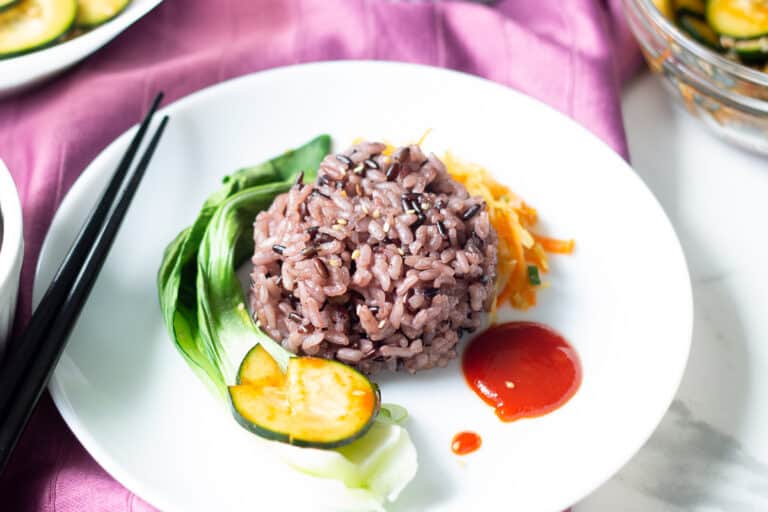
Purple Rice
Purple rice isn't a variety you buy at the store. It's what happens when black rice bleeds its anthocyanin pigment into white rice during cooking. The ratio determines the color. The method determines whether the purple stays in the rice or disappears into the cooking water.
- Total Time: 30 minutes
- Yield: About 3 cups of rice 1x
Ingredients
- 1 cup of basmati or long-grain white rice for non-glutinous, or sushi rice for sticky purple rice
- ¼ cup of black rice
- 2¼ cups of water (follow brand instructions for rice cooker)
- A decent pinch of salt ( about ½ teaspoon, less if using a table or iodized salt)
Instructions
- Measure, then rinse the white rice thoroughly, the black rice briefly. Submerge the rice in a bowl full of water and swish vigorously. Likewise, run water through the white rice while it's in a large mesh strainer until it runs clear. Transfer to the pot. Quickly, similarly rinse the black rice and add to the pot.
- Bring to a boil and cook over low heat. Add the water and a pinch of salt to the rice and bring to a boil. Immediately turn down the heat to medium-low and cover tightly. After 15 minutes, check the rice for doneness by tasting a few grains. If the water is gone but the rice is still chewy or hard, add a quarter cup more water, covering tightly again. The black rice grains can take up to 30 minutes to become tender. Repeat adding water as needed.
- Set aside, then fluff with a fork. Once the rice is tender but still has texture, take the pot off the heat and let it sit for ten minutes. Fluff the rice with a fork, and serve. Leftover purple rice keeps for up to five days refrigerated. Reheat in a covered pan over low heat with a splash of water, or in the microwave.
Notes
Do not boil. The only method that will not produce purple rice is boiling in excess water — the pigment washes out into the cooking liquid rather than transferring to the white rice. Always use the absorption or steaming method.
For Korean purple rice (heukmi bap), use a 1:8 ratio of black to white rice for a subtle color and flavor. Increase to 1:4 for deeper purple.
For Thai sticky purple rice, soak black and white glutinous rice together for up to eight hours before steaming in a bamboo basket or cheesecloth-lined colander over boiling water.
- Prep Time: 5 minutes
- Cook Time: 10-25 minutes
- Category: Side Dish
- Method: Stovetop
- Cuisine: Korean/Chinese/Thai
- Diet: Gluten Free
Nutrition
- Serving Size: ½ cup of rice
- Calories: 160
- Sodium: 290.7 mg
- Fat: 1.5 g
- Carbohydrates: 34 g
- Fiber: 1 g
- Protein: 4 g
- Cholesterol: 0 mg
Eat Informed
The Edible Times Newsletter on Substack, written by Chef Christina, covers the nutrition science behind ingredients and recipes like this every month. Complete with a new nutrient-dense, approachable recipe.
Totally Free. No ads. No brand influence.
Myra A.
Looks delicious. Will definitely make soon!
Willis
Mind blown! Growing up the only rice I knew of were the “crispy” kind that came in a cereal box. This has been a real delicious eye opener.