

Absinthe is a high-proof distilled spirit made from wormwood, anise, and fennel, often diluted with water before drinking, courtesy of an old French ritual. This primer on the notorious green elixir explains how to drink absinthe properly, including achieving a louche, tales of fire, and the purpose of the sugar cube.

Jump to:
Taste & Distillation
Absinthe is distilled from grande wormwood (artemisia absinthium) along with sweet fennel and green anise. Together, this "holy trinity" gives absinthe its unique flavor. The chlorophyll and volatile oils from the herbs create an enticingly green liquor brimming with licorice notes. And one very high in alcohol.
Most bottlings land between 55% and 70% alcohol by volume - think 100 to 125 proof. Not quite Everclear territory, but pretty damn potent (in a global pandemic, just mix it with aloe to make hand sanitizer). This high proof makes it nearly impossible to enjoy straight up, so it is traditionally diluted and sweetened. Neat, right?
Absinthe's flavor leans distinctly herbal, led by the anise and fennel, sharpened by the dry, green bitterness of wormwood. More subtle notes include hyssop, lemon balm, coriander, and even citrus. The tradition of diluting it with cold water softens the edges and opens the aromas, turning an aggressive liquor into a layered and surprisingly balanced one.
The Ritual Explained
The traditional absinthe ritual was born in 19th-century France, along with the rise of specialized tools such as fountains, glasses, and slotted spoons. The often lavish fountains feature multiple spouts connected to an elevated water dispenser, allowing cold water to drip slowly into several glasses at once. An ornate slotted spoon rests across the rim of each glass, holding a sugar cube that the water dissolves into the drink. The process softens the bitterness and coaxes out the spirit’s herbal aromatics.
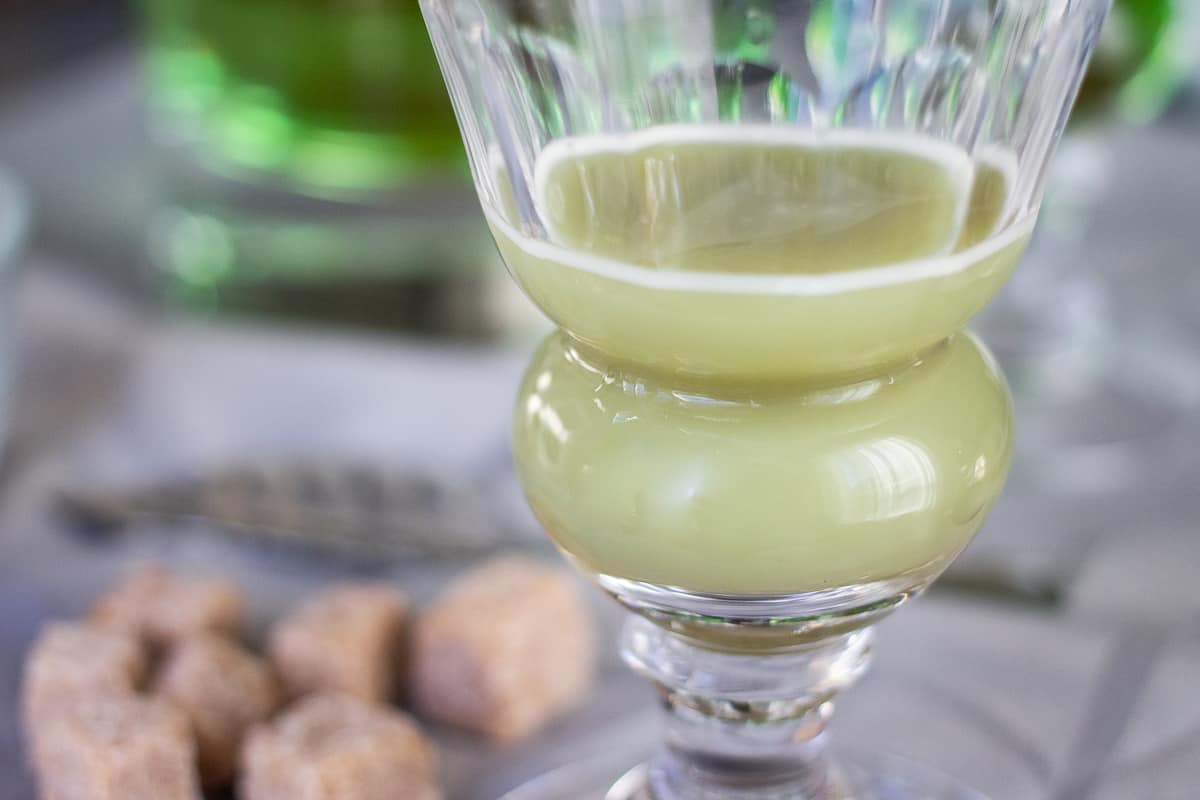
An absinthe glass, or a Pontarlier-style glass, is commonly used for the ritual. It includes a small reservoir at the base to measure the pour, with a wider bowl above to accommodate the water and contain the aromas that develop.

While absinthe spoons and reservoir glasses are historically accurate, they are not essential. Any slotted spoon or small strainer will hold a sugar cube just fine, and a standard cocktail or wine glass works equally well for proper dilution. The point isn’t the equipment, it’s the ratio of water to liquor and the technique.
The Ratio
3 to 5 Parts Water: 1 Part Absinthe
The classic ratio is three to five parts water to one part absinthe, which is about 4 ounces of water for each shot (ounce or so) of liquor.
Achieving a Proper Louche
Properly diluted absinthe creates a signature cloudy green color. The louche, as it's called, is a mark of proper mixology. The cloudiness happens because the cold water releases essential oils from the herbs that were dissolved in the alcohol. The oils aren’t soluble in water, so they form tiny suspended droplets that turn the drink opaque. And temperature matters.
The colder the absinthe and water, the faster and more pronounced the louche. If a louche doesn't form (your drink doesn't turn cloudy), the oils from the traditional herbs are missing, and the bottle is likely an imposter.
The Science Behind the Louche
What's happening is called a stable emulsion, both in science and cooking. The essential oils from the anise become dispersed in the water, and the result is the milky color. Even though the water and anise oils would normally repel one another, in the presence of the absinthe, the dispersion happens all on its own. Unlike a whisked vinaigrette that eventually separates, diluted absinthe holds its cloudy appearance for a significant amount of time. Scientists call the chemistry mystery the "ouzo effect" and have studied it for purposes beyond inebriation.
How to Drink Absinthe
The Original French Ritual
- Measure the absinthe. Pour about 1 ounce (two tablespoons) of absinthe into a glass. If using a traditional absinthe glass, fill to the reservoir line. This sets the correct base for dilution.
- Place the sugar cube. Rest a flat, slotted spoon across the rim and set one sugar cube in the center. The sugar is optional, but traditionally used to balance the spirit’s bitterness.
- Slowly add ice-cold water. Fill a small pitcher or measuring glass with ice water. Then slowly drip or trickle it over the sugar cube, allowing it to dissolve gradually into the absinthe. Aim for a ratio of 3 to 5 parts water to 1 part absinthe. As the water hits the spirit, the drink will turn cloudy. This is the louche, a natural reaction where essential oils from the spirit are released, softening the alcohol and opening up the aroma.
- Let it settle, then stir if needed. Give the drink a moment to rest so the herbal notes can fully bloom. If any sugar remains on the spoon, tip it into the glass and stir gently to dissolve. The final drink should be cold, lightly sweetened if desired, and aromatic rather than harsh. Different bottlings will produce a louche of varying shades.
Notes on the sugar cube: If you don't have a sugar cube, you can also sweeten the absinthe after diluting it with simple syrup. Or for a drier, more bitter experience, skip the sugar cube.
On Fire: The Czech (Bohemian) Ritual
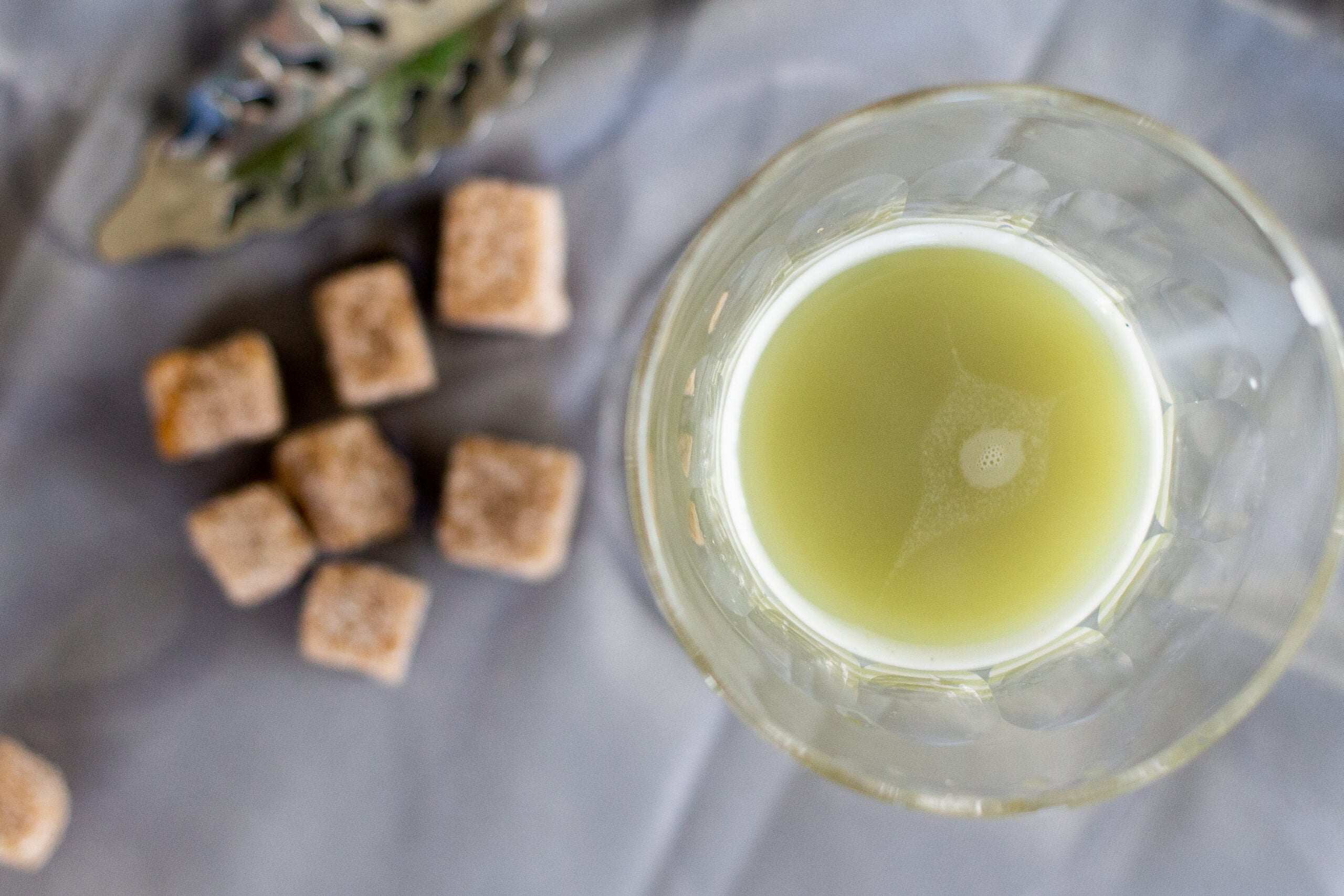
Setting absinthe on fire - or more specifically, an absinthe-soaked sugar cube - is known as the Czech or the Bohemian method. It is not traditional, but a more recent gimmick that traces back to Prague in the 1990s. Before you strike a match, there are a few things worth knowing: Absinthe is highly flammable, and the fire method works best with Czech absinth (no "e").
The goal is caramelized sugar, not a bonfire in the glass. Done right, it's a fun cocktail trick, especially at night when you can really see the small flame. Done wrong, you'll have a very hot glass and a ruined drink. Here's how to do it safely.
- Dip the sugar cube directly into the absinthe to soak it, or drizzle a small amount of the spirit over the cube while it sits on the spoon. Don't oversoak, you need the sugar intact, not dissolving.
- Set the soaked cube on an absinthe spoon or slotted utensil and rest it across the rim of your glass. Using a long match or lighter, carefully ignite the sugar cube. The flame will be faint; dim the lights if needed to see it clearly. Never blow on it to extinguish, and never light the absinthe in the glass on fire.
- Allow the sugar to caramelize and the flame to burn out on its own, usually 20–30 seconds. Keep the glass on a flat, stable surface and do not walk away.
- Once the flame is fully out, slowly drizzle ice-cold water over the cube so it dissolves into the absinthe below. Stir gently to incorporate any remaining caramelized sugar.

Truth be told, the sugar cube may light only for a short moment. To skip sipping an absinthe with an essence of burnt sugar, stick with tradition.
The Case Against Bohemian-style Absinthe
This Bohemian-style absinth is higher proof and lower in anise than its French counterpart - so low, in fact, that purists argue it shouldn't legally carry the absinthe name at all.
Classic Cocktails
If the traditional drink is still too strong, absinthe cocktails mix the face-twisting liquor with a range of flavors and fun history. Since absinthe is so strong, many cocktails simply call for an "absinthe rinse". In mixology, a rinse means adding a small amount to the glass, swirling to coat the inside, then pouring off the excess.
- The Sazerac is the absinthe cocktail, or at least the most notable. It dates back to mid-19th-century New Orleans, where Antoine Amédée Peychaud, an apothecary owner in the French Quarter, started adding his bitters to cognac. The drink takes its name from his family's cognac brand, Sazerac, and gained popularity at their coffee houses and bars across the city. Cognac, Peychaud’s bitters, and a rinse of absinthe make the drink. Many consider it America’s first cocktail.
- Death in the Afternoon. Ernest Hemingway's own recipe. A pour of absinthe topped with Champagne until it turns pleasantly cloudy.
- Corpse Reviver No. 2. Start with an absinthe rinse, then add equal parts gin, Cointreau, Lillet Blanc, and lemon juice. A hair-of-the-dog ditty that hails from Prohibition origins.
- Absinthe Frappé. Another New Orleans original was born at the Old Absinthe House in the French Quarter in 1874. Shake absinthe with simple syrup, pour over crushed ice, and top with soda water. Cold, herbal, and dangerously easy to drink.
- Morning Glory Fizz. Absinthe, lemon juice, egg white, and soda. A frothy cocktail with a lush, smooth mouthfeel.
Origins & Lore
The most popular iteration of the drink's birth is that a Swiss physician developed it in the 1800s as a tonic for malaria and other ailments (perhaps one of which was boredom). The spirit's potency and bitterness led to the French ritual of dilution, and the nickname, la fée verte (the green fairy). Legends claim that absinthe will send you to meet Lucy in the sky with diamonds, which has been debunked by modern science.
The spoonful of sugar, however, helped the absinthe go down. And down it went. By the late 19th century, absinthe evolved into a drink for the masses. The people of France alone kicked back 36 million gallons a year. Collectively drinking six times more absinthe than their coveted, single-vineyard wines.
Yes, you read that right, six times more.
Frequently Asked Questions
The claim that absinthe is psychotropic is widely agreed upon to be a myth. Absinthe contains varying levels of the volatile plant compound thujone, which in concentrated amounts can be toxic. But even the levels in French-produced bottles aren't enough to induce a hallucinatory experience or affect the nervous system.
This is the most persistent myth about the spirit. Scientists found that thujone, the compound in wormwood blamed for psychedelic effects, only influences mood and performance at doses far higher than what any absinthe contains. Any effects historically described as hallucinations were almost certainly caused by the very high alcohol content and heavy drinking. Not thujone.
Yes. Absinthe is legal in the U.S., though it was banned in the early 20th century (during Prohibition) and only reapproved in 2007. When Prohibition ended in December of 1933, the U.S. continued to ban imports of absinthe due to the misconception that it contained hallucinatory compounds. Quite the contrary, absinthe is no more lethal to mind or body than any other high-proof spirit. Today, it must meet federal regulations limiting thujone to trace amounts (less than 10 parts per million), consistent with modern European standards.
You can generally find absinthe anywhere you buy spirits. Even most state-run liquor stores will carry at least one brand. A few American distillers are crafting less bitter, wonderfully herbal absinthe this side of the pond. Oregon Spirit Absinthe is an award-winning bottle made in the USA. In Europe, and France especially, the spirit is quite easy to find.
Yes. Sugar is optional. Well-made absinthes can be diluted with water alone, which reveals their herbal complexity without added sweetness. The sugar cube is part of the ritual, not a requirement.
While the traditional French ritual uses cold water dripped over a sugar cube, the fire one (or Czech or Bohemian pour) calls for lighting an absinthe-soaked sugar cube on fire first. The flashy stunt came about in the late 1990s, but it is not a historical French tradition. Lighting the sugar cube on fire is a tiny spectacle, but it can be dangerous and also add harsh compounds to an already bitter drink.
Have a favorite way to prepare absinthe, or a question about the ritual? Drop it in the comments.
📖 Recipe

How to Drink Absinthe [Proper Ritual]
The ingredients, amounts, and steps for the original absinthe ritual, including the sugar cube, water drip, and how to create a proper louche.
- Total Time: 7 minutes
- Yield: 1 Absinthe Cocktail 1x
Ingredients
- 1 ounce (2 tablespoons) of absinthe
- 1 to 2 sugar cubes
- 3 to 5 ounces of ice water (about ¼ cup)
Tools
- Absinthe spoon, slotted silver/metal spoon, or mesh strainer
- Traditional absinthe glass or rocks glass
Instructions
- Measure the absinthe. Pour the absinthe into your glass. If using a traditional absinthe glass, simply fill the reservoir.
- Place the sugar cube. Rest an absinthe spoon (or a flat, slotted spoon) across the rim and set one sugar cube in the center.
- Slowly add ice water. Fill a measuring glass with ice water, the colder the better. Then slowly drip or trickle it over the sugar cube, allowing it to gradually dissolve the sugar into the absinthe. Aim for a ratio of 3 to 5 parts water to 1 part absinthe. As the water hits the spirit, the drink will turn cloudy. This is the louche, a natural reaction where essential oils are released and the aroma opens up.
- Let it settle, then stir if needed. Let the drink rest a moment so the herbal notes can fully bloom. If any sugar remains on the spoon, tip it into the glass and stir gently to dissolve.
Notes
On Equipment
You can order absinthe glasses and spoons from online retailers. A rocks glass or stemmed cocktail glass makes a great substitution for a traditional absinthe glass.
- Prep Time: 2 minutes
- Cook Time: 5 minutes
- Category: Drinks
- Method: Mixology
- Cuisine: French
- Diet: Vegetarian
Eat Informed, Not Influenced
The Edible Times Newsletter on Substack, written by Chef Christina Bailey, CCMP, covers the nutrition science behind ingredients and shares a new recipe every month. And occasionally a delicious cocktail.
Totally Free. No ads. No brand influence.
More Cocktails


Michael
It all sounds about right - except for that no hallucinations part. Please don’t tell me that nobody mentioned mild hallucinations in your research. I am here to say that I disagree with that statement. I’m not talking about LSD/mushroom types of visuals. I’m talking about mild to medium, pleasant, visual effects. And those visuals are not amplified by consuming more absinthe. Please let me set the stage..,
My buddy & I were sitting in a BVI beach bar having a beer when I saw the bottle behind the bar. When I ask if it was real absinthe, the bartender said of course. I hadn’t thought about it but, we were basically in England. I ordered 2 drinks; the bartender asked if we had ever had it before, we said no, so he says: “split one”. So we did the whole experience and left thinking: well that was useless. After leaving the bar and walking down the beach for about 3 minutes, I stopped and said to my buddy, “do you see/feel that?” We busted out laughing and said well - there it is! We were both experiencing a similar visual/vision of gentle, expanding and contracting everything. Air, beach, palm trees & sky were all breathing in unison. It was, pleasant, mild & gentle, and only lasted several hours, but it was something I immediately recognized as a hallucination and was incredibly beautiful.
So - there it is, believe it or not. I just wanted to share.
Glen Lee Jensen
there's nothing more wonderful than a touch of magical ✨️ drinks